Branded vs Unbranded Corporate Gifts: When Your Logo Helps and When It Hurts
Every corporate gift order in India eventually reaches the same question, and it is usually asked late, when the items are already chosen and the clock is running. Should the logo go on it?
The marketing team says yes, of course — the whole point of a corporate gift is brand visibility, and an unbranded gift is a missed impression. The HR team is less sure — a logo on a gift for a senior client can feel like advertising dressed up as appreciation, and a logo on a premium item can make it look cheaper than it is. Procurement wants to know what the branding costs and whether it delays delivery. And the person actually receiving the gift, who is never in the meeting, will judge the answer in about three seconds: does this feel like a gift, or does it feel like an advert?
Both sides are right, which is why the question keeps coming back. A logo on the right gift, for the right person, in the right place, is genuinely valuable — it turns a useful object into a daily reminder of the company, and it is the one form of advertising the recipient welcomes. A logo on the wrong gift, for the wrong person, in the wrong place, does real damage — it turns a thoughtful gesture into a promotional freebie, and it tells the recipient the gift was bought for the company’s benefit, not theirs.
This guide does not pick a side. It works through what “branded” and “unbranded” actually mean, the honest comparison between the two, the situations where a logo helps and the situations where it hurts, what branding really costs, how to judge a branding method, the compliance points that matter for client gifts, and a decision framework you can apply to your own programme. It ends with the answer most experienced buyers reach: the question is not whether to brand, but how, where and for whom.
What “Branded” and “Unbranded” Actually Mean
The words sound like a simple binary, but in practice there are at least four levels of branding, and the difference between them is the whole subject of this guide.
Fully branded means the logo is the most visible thing on the item: a large print across a t-shirt, a big logo on a bag, a bottle with the company name in full colour. This is promotional merchandise, and everyone who sees it knows exactly which company gave it. It works for events, for internal teams and for mass distribution, and it fails whenever the gift is meant to feel personal.
Subtly branded means the logo is present but quiet: a small debossed mark on a leather notebook, a tone-on-tone embroidery on a polo shirt, a laser-engraved monogram on a steel bottle, a logo on the inside of a lid rather than the outside. The recipient knows who gave it, and so does anyone who looks closely — but the item reads as a quality object first and a branded object second. This is where most good corporate gifting lives, and it is the level most buyers should be aiming for.
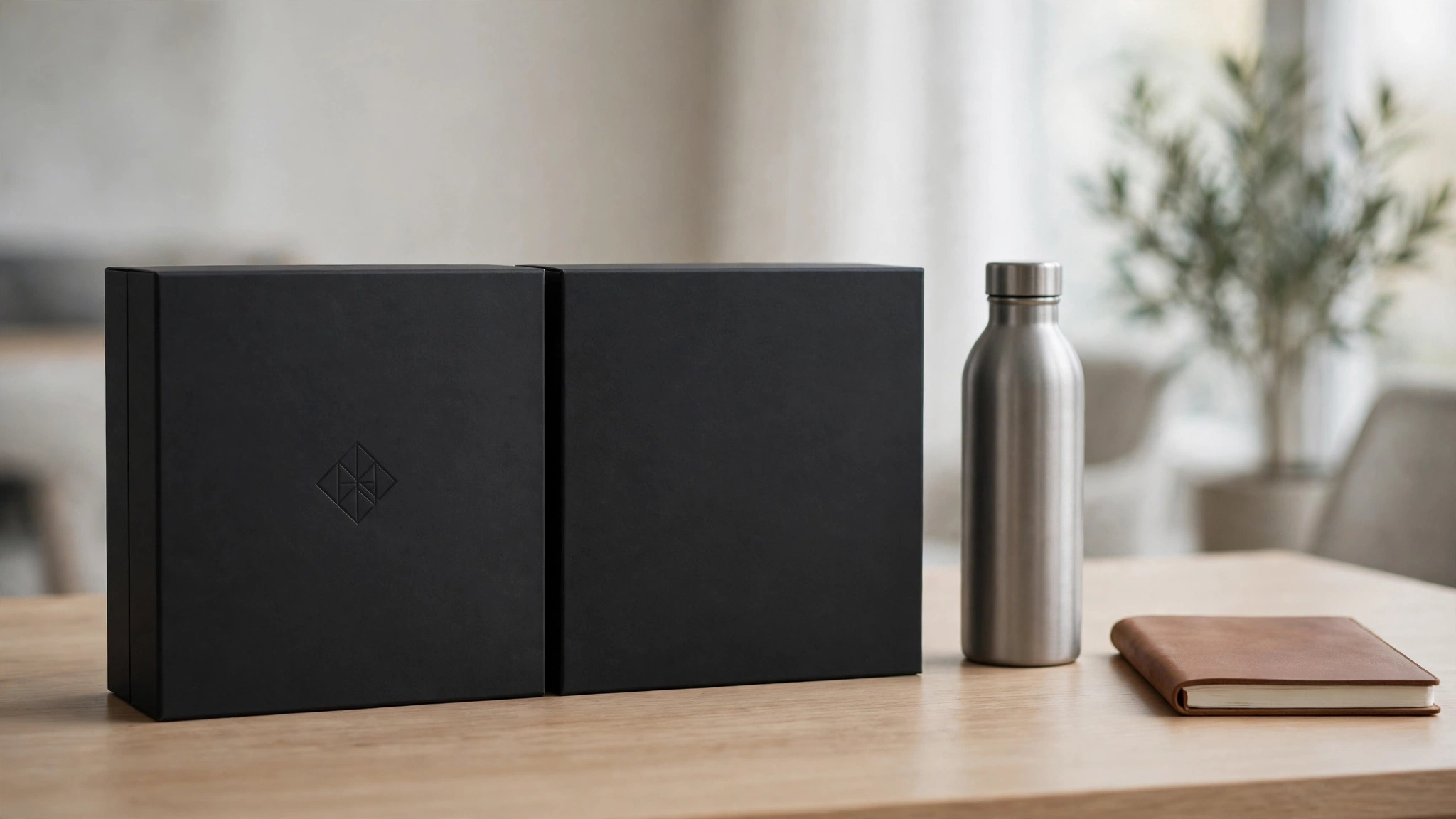
Packaging-only branding means the item itself is unbranded, but the box, the sleeve, the ribbon or the message card carries the logo. The recipient opens a branded box and takes out a clean, unmarked item. This is the compromise that works best for premium and client gifts: the company is visible at the moment of opening, and then it steps aside and lets the gift speak for itself.
Fully unbranded means no logo anywhere — not on the item, not on the box, not even on the card, beyond a handwritten or printed message with the giver’s name. The gift is judged entirely on its own quality. This is the right choice for the most sensitive recipients, and it is also the choice that demands the most confidence, because there is nothing to hide behind: if the item is mediocre, the recipient will notice, and there will be no brand story to distract them.
Most buyers who say “branded” mean the first level and most buyers who say “unbranded” mean the fourth. The useful conversation happens in the middle two levels, and the rest of this guide is built around choosing between all four — not between two extremes.
There is also a distinction worth making early, because it confuses a surprising number of orders: branding is not personalisation. Branding puts the company’s mark on the gift. Personalisation puts the recipient’s name, initials or a message on it. A gift can be branded, personalised, both, or neither — and the combination matters. A bottle with the company logo and the employee’s name feels personal and proud. A bottle with only the company logo feels like swag. A bottle with only the employee’s name feels like a personal gift that happens to come from work. The standardisation versus customisation guide on this site covers the programme-level version of this dilemma — when every recipient gets the same thing and when each one gets something tailored — and the same thinking applies item by item: the more personal the gift feels, the less the logo matters, and the more the logo matters, the less personal the gift feels.
Branded vs Unbranded: The Honest Head-to-Head
The table below compares the two approaches on the dimensions that actually decide whether a gift works. Neither side wins on every row. The point is to make the trade-offs visible, so the decision is made on the recipient and the occasion rather than on whichever department argues loudest.
| Dimension | Branded gift | Unbranded gift |
|---|---|---|
| Brand visibility | High — the logo is seen every time the item is used | None on the item — the company is invisible after opening |
| How the recipient reads it | “My company gave me this” — pride or promotion, depending on the item | “Someone chose this for me” — personal, if the item is good |
| Perceived value | Can look cheaper if the logo is loud or the print is poor | Can look more expensive — the item is judged on its own quality |
| Best for | Employees, events, onboarding, mass festive programmes, internal teams | Clients, CXOs, senior leaders, personal milestones, regulated recipients |
| Worst for | Senior clients, premium occasions, gifts meant to feel personal | Mass events, brand launches, situations where recall is the goal |
| Cost | Higher — branding adds setup, per-unit and sample costs | Lower per unit — but the item itself must carry the full impression |
| Lead time | Longer — artwork, proofing, sample and production add days | Shorter — no branding step, no artwork approval |
| Risk | A bad logo, wrong colour or poor print damages the whole gift | A mediocre item has nothing to hide behind — quality is exposed |
| Reuse and display | The recipient uses it at work and in public, carrying the brand | The recipient uses it anywhere, including with the company’s competitors |
| Compliance risk | A logo can make a gift look like a promotional inducement | Lower profile — but value limits still apply either way |
| Memory and recall | Strong for the brand — the logo is the reminder | Strong for the gesture — the gift itself is the reminder |
| Flexibility | One design for everyone — hard to tailor | Easy to tailor by recipient, since no artwork locks the item |
Read the table as a whole and the pattern is clear. Branded gifts win on visibility, recall, pride and scale. Unbranded gifts win on perceived value, personal feel, senior recipients and flexibility. Neither wins on cost alone — branding adds cost, but an unbranded gift needs a better item to carry the same impression, and the better item usually costs more than the branding would have. And neither wins on risk: a badly branded gift and a mediocre unbranded gift fail in exactly the same way, by telling the recipient the company did not think hard enough.
The table also explains why the debate never resolves. The two approaches are optimised for different jobs. If the gift’s job is to make the brand visible — an event, a launch, a welcome kit, a mass festive programme — branding is the honest answer. If the gift’s job is to make a person feel valued — a client, a CXO, a milestone, a thank-you — an unbranded gift, or a subtly branded one, is the honest answer. Most companies have both kinds of jobs at once, which is why the answer is almost never “always brand” or “never brand”, but a rule for which gift gets which treatment.
When Your Logo Helps
A logo is not a decoration. It is a claim — this object belongs to our company, and we are proud enough of it to put our name on it. When that claim is true, the logo helps. Here are the situations where it genuinely does.
For employees, a logo builds belonging. An employee who receives a well-made branded item — a bottle, a bag, a notebook, a hoodie — reads it as membership. It says they are part of the team, and the item becomes part of their working day: on the desk, in the meeting, on the commute. This is why onboarding kits work so well with branding, and why the welcome kit ideas guide on this site puts branded items at the centre of a new joiner’s first week. A new employee’s first branded item is often the first moment the job feels real. An unbranded welcome kit, by contrast, feels like it could have come from any company — and for a new joiner, that is a missed moment.
For events, a logo is the point. A conference, a launch, an offsite, a team day — the gift exists to mark the event and to carry it home. A branded item from an event is a souvenir with a purpose: it reminds the attendee of the day, and it advertises the company every time it is used afterwards. An unbranded event gift is a wasted opportunity, because the one thing an event gift is supposed to do — remind people of the event — is the one thing it cannot do without a mark. The speaker and event gifts guide on this site covers what to send attendees, and the same logic applies to the branding: event gifts should be branded, and they should be branded boldly enough to be recognised, because recognition is the job.
For mass festive programmes, a logo creates fairness and identity. When hundreds or thousands of employees receive the same gift, a logo does two jobs at once: it makes every gift visibly equal, so nobody can compare theirs with a colleague’s and feel short-changed, and it makes the gift visibly from the company, so the festive gesture is attributed to the right place. A festive programme without branding risks the worst outcome in corporate gifting — a gift that is enjoyed and never attributed, because nobody remembers who gave it. The gift cards versus physical gifts guide on this site makes the same point from the other direction: a physical gift’s advantage over a gift card is that it carries the brand, and a physical gift without any branding gives up that advantage for nothing.
For internal pride and team identity, a logo is a uniform. Branded apparel — polo shirts, hoodies, jackets — works because it is worn together. A team in matching branded polos at an event, or in branded hoodies at an offsite, looks like a team, and the people wearing them feel like one. The branded polo t-shirts guide and the branded hoodies and jackets guide on this site both cover how to judge quality before a bulk order, and the branding is inseparable from the quality: a well-made branded polo is a point of pride, and a badly made one is an embarrassment the employee will not wear. The logo helps when the item is good enough to be worn in public — and that is the test.
For brand recall, nothing else does the job. A steel bottle with a quiet logo is seen every day on a desk, in a meeting, on a train. A notebook with a debossed mark is opened in front of clients. A bag with a logo travels through airports. No other form of brand exposure is welcomed by the recipient in this way, and no other form is this cheap per impression. The drinkware guide on this site covers mugs, bottles and sippers for corporate branding, and the reason drinkware dominates branded gifting is simple: it is used daily, in public, and it carries a logo without looking like an advertisement. That is the logo helping — and it is the strongest argument for branding there is.

When Your Logo Hurts
The same logo that builds pride in an employee can damage a gift to a client. The difference is not the logo — it is the relationship, and the message the logo sends in that relationship. Here are the situations where a logo hurts, and where an unbranded gift, or a subtly branded one, is the better choice.
For clients, a loud logo turns a gift into an advert. A client who receives a premium gift with a large, bright logo does not think “what a thoughtful company”. They think “this company just paid to advertise to me, and used a gift to do it”. That reading is fatal to the purpose of client gifting, which is to make the client feel valued as a person, not targeted as an audience. The Christmas gifts for clients guide on this site covers premium client ideas, and the rule that runs through it is that a client gift should feel chosen, not distributed. A logo on the packaging and a quiet mark on the item is the most branding a client gift should carry — and for the most senior clients, even that is too much.
For CXOs and senior leaders, a logo signals that you do not know the room. Senior recipients have received every kind of branded item already, and they can tell in a glance whether a gift was chosen for them or ordered in bulk. A branded item given to a CXO says the giver treated them like one of five hundred. An unbranded premium item — a leather notebook, a fine pen set, a handcrafted object — says the giver thought about this person specifically. The premium pen sets guide on this site covers the etiquette of premium gifting in detail, and the same rules apply: fewer items, each one better, branding kept quiet or absent, and a note that mentions the person by name. The premium pens versus branded pens guide on this site makes the same point from the product side — what a pen says about a brand is not the logo on the barrel, but the quality of the pen itself.
For personal milestones, a logo is the wrong message. A wedding gift, a long-service award, a retirement gift, a thank-you for a personal favour — these are moments about the person, and a logo drags the company into a moment that is not about the company. A long-service award with a large logo tells a twenty-year employee that the company values its own brand more than their twenty years. The long-service award gifts guide and the gifts for employees getting married are occasions where the gift should be about the recipient, and the company should be visible only in the message that accompanies it, not on the object itself.
For regulated and government recipients, a logo can create a compliance problem. Some recipients — in banking, in pharma, in government, in public-sector undertakings — work under gift policies that limit what they can accept, and a branded gift can look like an inducement in a way an unbranded gift of the same value does not. The compliance guide on this site, the gift value limits guide, and the guide to when a corporate gift becomes a bribe all cover this ground, and the practical point is simple: where the recipient’s organisation has a policy, the logo makes the gift more visible to the policy, not less. Check the recipient’s rules before branding a gift for them, and when in doubt, go unbranded and keep the value modest. These are general guidance points, not legal advice — the recipient’s compliance team and the company’s own policy are the authorities.
When the item is cheap, a logo makes it look cheaper. This is the most common branding mistake in corporate gifting, and it is entirely avoidable. A logo does not add value to an item — it amplifies whatever value the item already has. Put a logo on a well-made bottle and the bottle looks like a premium branded product. Put a logo on a flimsy bottle and the bottle looks like a promotional freebie, and the logo tells everyone exactly which company handed out flimsy bottles. The guide to avoiding generic gifts that employees do not value covers this from the recipient’s side, and the guide to why one gift looks premium while another looks cheap covers the same ground from the presentation side: the item has to be good before the logo goes on, because the logo will not rescue it and will actively make it worse.
When the branding is done badly, the logo is the failure. A blurred print, a wrong colour, a logo that peels off a bottle after a week, an embroidery that puckers the fabric — these are not small defects. They are the recipient’s entire experience of the gift, and they are the company’s brand, rendered badly, in the recipient’s hands. The sample approval checklist on this site exists because of this: the twelve checks it lists are the cheapest insurance in corporate gifting, and the first of them is to check the branding on a physical sample before production. A logo that is applied badly is worse than no logo at all, and a vendor who will not show a branded sample is a vendor to walk away from.
The Quality Rule: A Logo Amplifies Whatever the Item Is
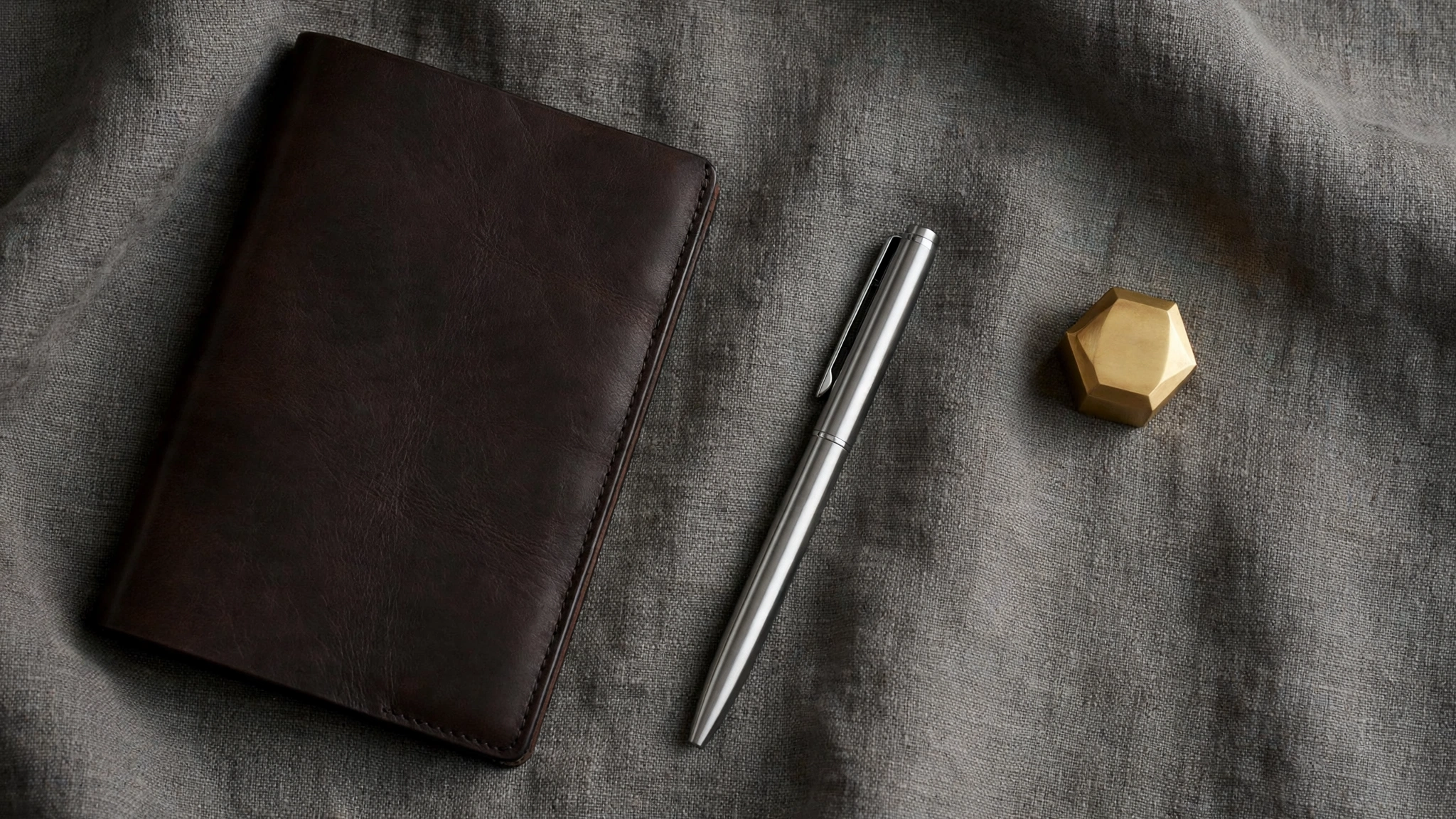
If there is one rule to take from this guide, it is this: a logo is an amplifier, not a disguise. It makes a good gift look better and a bad gift look worse, and it does both in proportion to how visible it is.
A large, bright logo on a good item says the company is proud of the item and proud of its brand, and the recipient reads both messages at once. A large, bright logo on a poor item says the company is proud of its brand and indifferent to the item, and the recipient reads that too. A small, quiet logo on a good item says the company has taste — it chose a good item and marked it discreetly. A small, quiet logo on a poor item is the least damaging option, but it is still a poor item, and the recipient will still notice.
This is why the order of decisions matters. Choose the item first, on its own merits: would this be a good gift with no logo on it at all? If the answer is no, do not fix it with branding — fix the item, or choose a different one. If the answer is yes, then decide how much branding the item, the recipient and the occasion can carry. That sequence — item first, branding second — is the difference between a branded gift that works and a branded gift that embarrasses the company that gave it.
It is also why unbranded gifts demand more confidence, not less. An unbranded gift has nowhere to hide. There is no logo to explain why the item was chosen, no brand story to fill the gap, no packaging mark to carry the message. The item has to be good enough to stand on its own, and the message card has to do the work the logo would otherwise do. Companies that gift unbranded items well are usually companies that have invested in the item itself — better materials, better design, better packaging — and that investment is visible to the recipient in a way a logo never is.
Branding Methods: A Short Map (Not a Deep Dive)
The method matters as much as the decision to brand, because the method decides how the logo feels: printed, engraved, embossed, debossed or embroidered, the same logo reads completely differently. The table below is a short map — the bulk customisation guide on this site covers engraving and printing at scale in detail, and the branding-methods comparison coming in this programme covers all three methods head to head, so this section stays brief and does not repeat either.
| Method | Best on | Feel | Cost and scale note |
|---|---|---|---|
| Screen / UV printing | Bottles, mugs, notebooks, boxes | Bold, colourful, visible | Low per-unit at volume; setup per design; check durability on a sample |
| Laser engraving | Steel bottles, metal pens, tech items | Permanent, premium, quiet | Higher per-unit; excellent for premium items; no colour |
| Debossing / embossing | Leather goods, diaries, notebooks, boxes | Tactile, understated, premium | Setup cost for the die; best at volume; no ink to fade |
| Embroidery | Polos, hoodies, caps, bags, apparel | Textured, durable, classic | Per-stitch pricing; small logos read best; check the fabric first |
| Foil stamping | Diaries, boxes, premium packaging | Luxurious, high contrast | Setup for the die; best for packaging and premium paper goods |
| Full-colour print | Hampers, boxes, sleeves, cards | Flexible, photographic | Cheap at volume; best on packaging, not on the gift itself |
Two practical rules follow from the table. First, match the method to the item and the recipient: engraving and debossing for premium and senior recipients, because they read as quality; printing and embroidery for employees and events, because they read as identity. Second, never choose a method you have not seen on a sample of the actual item — the sample approval checklist applies to the branding as much as to the item, and a method that looks good in a catalogue can look poor on the real material.
There is one more choice that matters and is often missed: where the logo goes. A logo on the front of a bottle is a statement. A logo on the base is a signature. A logo on the inside of a lid, or on the back of a notebook, is a discovery — the recipient finds it after they have already liked the item, and the discovery feels like a pleasant surprise rather than an advertisement. For premium and client gifts, the quiet placements are usually the right ones. For employee and event gifts, the visible placements are usually the right ones. The placement is the branding decision, just as much as the size of the logo is.
What Branding Actually Costs
Branding is rarely the largest cost in a gift order, but it is the cost most often left out of the budget — and the one that causes the most unpleasant surprises. Here is what to count.
Setup costs. Most branding methods have a one-time setup: a screen, a die, a plate, an embroidery digitisation. The setup is charged once, whatever the quantity, which means it matters most on small orders and least on large ones. A setup charge that is trivial across 5,000 units can be a meaningful share of a 50-unit order. Ask for the setup charge as a separate line, and ask whether it is charged again on a re-order — a good vendor keeps the setup on file and does not charge it twice.
Per-unit branding cost. On top of setup, there is a per-unit charge for applying the branding, and it varies by method, by number of colours, and by the size of the logo. A single-colour print is cheaper than a four-colour print. A small embroidery is cheaper than a large one. A laser engraving is usually charged per item regardless of quantity. Get the per-unit branding cost quoted separately from the item cost, and compare the fully loaded cost — item plus branding plus packaging plus delivery — with the budget, not the catalogue price. The hidden costs guide on this site covers the full list of costs that do not appear in a catalogue price, and the bulk discounts versus per-unit customisation guide covers how the trade-off between volume and customisation actually works.
Minimum order quantities. Branding usually raises the minimum order, because the vendor has to set up a production run. An unbranded item can sometimes be bought in small numbers; the same item branded often cannot, or the per-unit cost becomes so high that it is not worth it. The minimum order quantity guide on this site explains how order size changes the cost, and the rule is simple: if the quantity is small, ask whether branding is worth the setup and the minimum, or whether an unbranded item plus branded packaging would do the job better.
Proofing and sampling. A branded sample costs money and takes time — and it is the money and time that save the order. A sample shows whether the logo colour matches the brand guidelines, whether the print is sharp, whether the engraving is deep enough, whether the embroidery sits flat. The lead-time guide on this site shows how far in advance physical gifts should be ordered, and branding adds days to that lead time: artwork approval, sample production, sample approval, then the production run. Order the branded sample first, approve it in writing, and do not let production start before the sample is signed off.
Rework. The most expensive branding cost is the one nobody budgets for: a production run with the wrong logo, the wrong colour, or a spelling error, discovered after the items are printed. The corporate gift order playbook on this site covers what to do when an order goes wrong — damage, delay and wrong branding — and the best use of that playbook is to avoid needing it. A written artwork approval, a physical sample, and a check of the first items off the production line are the three controls that prevent rework, and they cost far less than a reprint.
The honest summary is that branding is cheap at scale and expensive at small quantities, cheap when it is done once and expensive when it is done wrong, and cheap when it is planned and expensive when it is rushed. None of that is an argument against branding. It is an argument for budgeting the full cost, including setup, sample and rework risk, before the order is placed — and for asking, on a small order, whether the branding is worth what it costs.
Compliance and the Branded Gift
Branding does not change the tax treatment of a gift in any material way — a branded bottle and an unbranded bottle of the same value are treated the same way — but it does change how a gift is perceived, and perception is what compliance policies are written about. Three points matter.
Value limits still apply. Whether the gift is branded or not, the recipient’s organisation may have a limit on the value of gifts its people can accept, and the company’s own policy may have one too. The gift value limits guide on this site covers how to set those limits, and the GST and tax compliance guide covers the practical tax position. Branding does not make a gift cheaper, and it does not make a gift more acceptable — an expensive branded gift is still an expensive gift. The points here are general guidance, not professional advice; confirm the position with the company’s tax adviser and the recipient’s policy before ordering.
A branded gift is more visible to a policy. A gift with a company logo on it is, by definition, a gift that advertises its source. If the recipient’s organisation has a policy against receiving gifts from vendors, a branded gift is the easiest kind to spot, the easiest to photograph, and the easiest to report. An unbranded gift of the same value is not more compliant — the value is the same, and the policy is about value, not logos — but it is less likely to be noticed, and less likely to be read as a promotional inducement. Where the recipient works in a regulated sector — banking, pharma, government, public-sector undertakings — the safer choice is usually an unbranded or packaging-only branded gift, modest in value, with a clear record of what was given and why. The corporate gifts for banks guide on this site covers premium ideas within compliance norms, and the same caution applies across regulated sectors.
Keep a record. For branded gifts especially, keep a simple record: what was given, to whom, at what value, on what occasion, and with what branding. The record-keeping guide on this site covers what auditors expect, and a branded gift is a gift the company has chosen to associate with its name — which means the company should be able to show, afterwards, that it was given properly. This is not bureaucracy for its own sake. It is the difference between a gifting programme and a pile of receipts, and it is what lets the company defend a gift if anyone ever asks about it.
A Decision Framework: Seven Questions Before You Brand
If the sections above have not settled the question for a specific gift — and for most orders they will not, because the answer depends on the recipient — use these seven questions. Answer them in order, and the branding decision will usually make itself.
1. Who is the recipient, and what is the relationship? Employees, event attendees and internal teams: brand it. Clients, partners, CXOs and senior leaders: brand it quietly, on the packaging, or not at all. A personal milestone: do not brand the item. The relationship decides the ceiling on how much branding the gift can carry, and no other question overrides it.
2. What is the gift’s job? If the job is visibility, recall, pride or identity, the logo is doing the job — brand it. If the job is to make a person feel valued, to mark a milestone, or to build a relationship, the logo is getting in the way — brand it quietly or not at all. A gift can have two jobs, but one of them is always the main one, and the branding should serve the main one.
3. Is the item good enough to carry the logo? Hold the item in your hand, with no logo on it, and ask whether it is a good gift. If it is not, fix the item before you think about branding — a logo will not save it, and it will make it worse. If it is, ask whether the logo will make it better or worse, and how large and how visible the logo should be. The item is the gift. The logo is the signature.
4. Where will the item be used? An item used in public — a bottle, a bag, a notebook in a meeting — carries the brand with it, and branding it is a genuine benefit. An item used at home, or in private, carries the brand nowhere, and branding it adds nothing. An item used in front of the company’s competitors carries the brand to the wrong audience, and branding it is a mistake. Think about where the item will actually live, not where it will be opened.
5. What does the budget allow? Count the full cost: item, setup, per-unit branding, sample, packaging, delivery. If branding takes the order over budget, the choice is between a better unbranded item and a cheaper branded one — and the better unbranded item usually wins, because the recipient judges the item, not the invoice. If the budget allows both a good item and good branding, brand it well. The corporate gifting budget planning guide on this site covers how to build the budget so that branding is a line in it, not a surprise at the end.
6. How much time is there? Branding adds days: artwork, proofing, sample, production. If the gift must go out this week, an unbranded item that is ready now beats a branded item that arrives late. If there are four to six weeks, branding is comfortable. If there are two to three weeks, branding is possible but tight — order the sample first, approve it fast, and do not change the artwork after approval. The lead-time guide on this site shows how to plan the timeline, and the corporate gift order playbook covers what to do when it slips.
7. What would you want to receive? This is the question that settles the ones the framework cannot. Imagine receiving this gift, from a company you do business with, with this logo, in this size, in this place. Would you use it? Would you show it to a colleague? Would you keep it on your desk, or put it in a drawer? If the honest answer is that you would use it and be glad of it, the branding is right. If the honest answer is that you would feel advertised to, it is wrong — and no amount of brand strategy will change that.
Common Mistakes That Waste the Budget
Most branding mistakes are not failures of taste. They are failures of process, and they are easy to name — which means they are easy to avoid.
Branding everything the same way. A company that puts the same large logo on every gift, for every recipient, is not branding — it is stamping. Employees, clients, CXOs and event attendees are different audiences, and they need different levels of branding. The fix is a simple rule, written down: who gets full branding, who gets subtle branding, who gets packaging-only branding, and who gets none. The standardisation versus customisation guide on this site covers the programme-level version of the same mistake, and the fix is the same: decide the levels in advance, and do not let a single artwork file decide for everyone.
Choosing the logo size by the artwork file, not by the item. A logo that looks right on a screen can look enormous on a bottle and invisible on a bag. The size should be chosen on a physical sample, at the actual size, on the actual item — not approved from a PDF. Ask the vendor for a sample at the size you intend to use, and look at it from the distance the recipient will see it from: across a desk, across a meeting table, across a room. If it dominates the item, it is too big. If it cannot be read, it is too small — or the item is the wrong one for that logo.
Sending the wrong logo file. A low-resolution logo, a JPEG with a white background, a logo in the wrong colour, a stretched or pixelated mark — these are the most common branding failures, and they are entirely preventable. The logo file formats guide on this site covers exactly what a vendor needs — vector files for print and engraving, high-resolution files for embroidery, the right colour format for each method — and the rule is simple: send the vector file, in the right colour, and ask the vendor to confirm they can use it before production starts. A vendor who accepts a low-resolution file without comment is a vendor who will print it badly.
Branding a gift that should have stayed unbranded. This is the mistake this whole guide is about, and it usually happens because the branding decision is made by the wrong person, or at the wrong time. The marketing team approves a branded item for a client list they have never met. The procurement team orders branded items because branded items are the default. The fix is to make the branding decision a separate decision, made by the person who knows the recipient, at the same time as the item is chosen — not after the order is placed, and not by default.
Forgetting the message card. A branded gift without a message card is a gift that speaks only about the company. An unbranded gift without a message card is a gift that speaks about no one at all. The message card is where the personal part of the gift lives — the recipient’s name, the reason for the gift, the occasion, a line that shows someone thought about them. The corporate gift message examples guide on this site covers the wording, and the rule is the same for branded and unbranded gifts: the card is not optional, and it is not the place for a sales message. It is the place for a human one.
Letting branding eat the budget. A company that spends a third of its per-person budget on branding has a third less to spend on the item, the packaging and the delivery — and the recipient notices the item, not the branding. The corporate gifting budget planning guide on this site covers how to split a budget, and the spending guide on where to spend — product, packaging or personalisation — covers the same trade-off from the presentation side. If the branding is taking money from the item, cut the branding, not the item. A good unbranded gift beats a mediocre branded one, every time.
Repeating the same branded gift every year. A branded bottle one year is a welcome gift. The same branded bottle every year is a collection of identical objects, and the third one goes into a drawer. Branding makes repetition more visible, because the logo is the same even when the item changes slightly. Vary the item, vary the branding level, and vary the method — and keep a record of what was given to whom, so the same person does not receive the same branded item twice. The guide to avoiding gift fatigue on this site covers how to keep a programme fresh year after year, and the first rule is to stop repeating the gift that worked last year just because it worked last year.
How to Tell Whether Your Branding Choice Worked
A branding decision that is never measured will be debated forever on opinions. A branding decision that is measured, even simply, produces an answer — and the answer is usually clear enough to settle the next order before it starts.
Ask the recipients. After the programme, ask a small set of questions while the gift is still fresh: did you use it, where do you use it, did the branding feel right, would you have preferred it with more branding, less, or none? That conversation, held within a few weeks of delivery, is worth more than any survey, and it tells you exactly what to change. For employees, add one question: are you proud to use it in front of colleagues? For clients, add one more: did the gift feel personal? The answers to those two questions are the branding decision, in the recipients’ own words.
Watch for the visible signs. A branded gift that works is visible: the bottle on the desk, the bag on the trip, the polo worn at the offsite. A branded gift that does not work is also visible: the item left in a drawer, the logo turned away from the camera, the gift quietly passed on to someone else. An unbranded gift that works is visible in a different way: it is used, it is shown, it is mentioned — and the recipient remembers who gave it, even without a logo. An unbranded gift that does not work is invisible in the worst way: it is used, and nobody knows who gave it, and the company has paid for a gift that built no relationship at all.
Count the real cost. After the programme, count the total cost per person — item, setup, branding, packaging, delivery, sampling, tax and any rework — and compare the branded cost with what an unbranded version would have cost. Then count the waste: how many items were not used, how many were returned or replaced, how many branding defects were found. The branding that delivered more use for the same spend is the branding that worked, and that is the number to take into the next order. The corporate gifting scale guide on this site, comparing gifting for 50 employees with 5,000, shows how the cost per person changes with headcount, and the same discipline applies after the fact: measure the real cost, not the quoted one.
Decide, and write it down. The most useful outcome of measuring a programme is a written branding rule for the next one: this level of branding, for this recipient group, on this kind of item, at this budget. Write it down while the evidence is fresh, and the next order starts from a rule rather than a debate. A company that does this for two or three programmes ends up with a branding policy that is genuinely tuned to its people — and that is a competitive advantage no single gift, branded or unbranded, can buy on its own.
FAQs
1. Should corporate gifts have the company logo on them?
It depends on the recipient and the occasion. For employees, events and mass festive programmes, a logo usually helps — it builds belonging, marks the occasion and creates brand recall. For clients, CXOs and personal milestones, a loud logo usually hurts — it turns a gift into an advertisement. For most premium and client gifts, the best answer is subtle branding or packaging-only branding: the company is visible at the moment of opening, and then it steps aside and lets the gift speak.
2. Do branded gifts look cheap?
A logo does not make a gift look cheap — a cheap item with a logo looks cheap, and a good item with a logo looks premium. A logo amplifies whatever the item already is. Put a logo on a well-made bottle, notebook or bag and it reads as a premium branded product. Put the same logo on a flimsy item and it reads as a promotional freebie. Choose the item first, on its own merits, and only then decide how much branding it can carry.
3. Is it better to give unbranded gifts to clients?
Usually, yes — or to brand them very quietly. Clients judge a gift on whether it feels chosen for them, and a large logo tells them the gift was chosen for the company’s benefit. The best approach for most client gifts is packaging-only branding, or a small, discreet mark on the item itself, with a personal message card doing the work of showing the gift was thought about. For the most senior clients, a fully unbranded premium item with a handwritten note is often the strongest choice.
4. How much does logo branding cost on corporate gifts?
Branding usually has three parts: a one-time setup charge (for a screen, die, plate or embroidery digitisation), a per-unit charge for applying the branding, and the cost of a branded sample. The setup is charged once, so it matters most on small orders; the per-unit charge varies by method, colours and logo size. Ask for each part quoted separately, and compare the fully loaded cost — item plus branding plus packaging plus delivery — with the budget, not the catalogue price.
5. What is the best branding method for corporate gifts?
It depends on the item and the recipient. Laser engraving and debossing suit premium items and senior recipients because they read as quiet quality. Screen and UV printing suit employees and events because they are bold and cost-effective at volume. Embroidery suits apparel. Foil stamping suits premium packaging and diaries. Whatever the method, always approve it on a physical sample of the actual item before production — a method that looks good in a catalogue can look poor on the real material.
6. Can a branded gift cause a compliance problem?
Branding does not change the tax treatment of a gift, but it does change how visible the gift is to a compliance policy — and some recipients, in banking, pharma, government and public-sector roles, work under gift policies that limit what they can accept. A branded gift is the easiest kind to spot and to read as a promotional inducement. Where the recipient has a policy, check it before branding, keep the value modest, and keep a record of what was given. This is general guidance, not legal advice — the recipient’s compliance team and the company’s own policy are the authorities.
7. Should the logo go on the gift or on the packaging?
For premium and client gifts, the packaging is usually the better place: the company is visible at the moment of opening, and the item itself stays clean and usable anywhere, including in front of competitors. For employee and event gifts, the item is usually the better place: the logo is the point, and the item carries it into meetings, commutes and public spaces. A good middle ground is both, done quietly — a small mark on the item and the logo on the box — so the gift is attributed without being advertised.
The question was never really whether to brand a corporate gift. It is how much branding this gift, for this person, on this occasion, can carry — and still feel like a gift.
Start with the recipient, not the logo. If the gift is for your own people, brand it with pride, and make the item good enough to deserve the mark. If it is for a client or a senior leader, brand it quietly, or let the packaging carry the name and let the gift carry the message. If it is for a milestone, leave the logo off and let the moment belong to the person. And whatever you decide, choose the item first, approve the branding on a real sample, and count the full cost before the order goes in.
If you are planning a festive programme, a welcome kit, a client gift or an event order and you want help getting the branding right — the level, the method, the placement and the budget, matched to your team and your recipients — talk to Arrow Gifter. Tell us who the gift is for, when it has to arrive, and what it has to do, and we will put together a programme your recipients actually use, keep and remember — with your logo helping, never hurting.
Leave a comment