
Sample Approval Checklist for Bulk Corporate Gifts: 12 Things to Check Before Production
You have chosen the gift, agreed the price and confirmed the quantity. Before the vendor starts production, they send you one piece and ask you to approve it. That single piece — the sample — is the most important moment in your entire order, because it is the last moment when a mistake is cheap.
A sample that is approved carelessly becomes the standard for the whole production run. If the logo is slightly off-centre on the sample and you approve it, the vendor will produce 500 gifts with the logo slightly off-centre, and they will be right to say you approved it. If the colour is wrong on the sample and you wave it through because the deadline is tight, the colour will be wrong on every gift your employees and clients receive. The sample is not a formality. It is the contract, in physical form, for what the rest of the order must look like.
This guide gives you a 12-point checklist to run on every corporate gift sample before you approve it, explains the three types of sample you will be offered, and shows you how to run the approval process so that nothing is left to memory or to a verbal “looks fine”. It is written for HR, procurement and marketing teams in India who order in bulk — 50 pieces or 5,000 — and who need the finished gifts to look as good as the quotation promised.
What a Sample Actually Is — and the Three Types You Will Be Offered
A sample is a single finished piece of the gift, made exactly as the production run will be made — same product, same material, same branding method, same packaging. Its purpose is to let you see, touch and test the real thing before the vendor commits to producing hundreds or thousands of them. A photograph or a digital mock-up is not a sample. A mock-up shows you what the gift might look like; a sample shows you what it does look like.
Vendors in India typically offer three kinds of sample, and it matters which one you are looking at, because each one answers a different question.
A pre-production sample is made after you confirm the order, using the actual production materials and the actual branding setup. It is the most important sample, because it is the closest thing to the finished gift. If you are ordering branded diaries, the pre-production sample is a diary from the same paper and cover stock, debossed with your logo from the same die that will be used for the run. Approving this sample is approving the production run.
A golden sample (sometimes called a sealed sample) is the approved pre-production sample itself, kept aside and signed by both sides. It becomes the reference for the whole order: when the production run is inspected, each piece is compared against the golden sample, not against a photograph or a memory. If a dispute arises later — the vendor says the colour was always that shade, you say it was not — the golden sample settles it. Always ask for the golden sample to be kept and labelled with the order number, the date and the names of the people who approved it.
A stock sample is an off-the-shelf, unbranded piece of the product — a plain bottle, a blank diary, a hamper with no logo. It tells you about the product’s quality, size and feel, but nothing about how your branding will look on it. A stock sample is useful at the selection stage, when you are choosing between products. It is not a substitute for a pre-production sample, and it should never be the basis for approving a branded order.
One practical point: for a large or high-value order, ask for more than one pre-production sample. Two or three pieces let you check consistency — whether the branding is in the same place on each one, whether the colour is the same across pieces, and whether the packaging is assembled the same way every time. A single perfect sample can hide variation that only shows up when you compare two. This is doubly true for kits, where several items are assembled together; the sample should be the complete kit, not just its best-looking item.
Why Sample Approval Is the Cheapest Quality Control You Will Ever Buy
Every quality problem in a bulk gift order has two possible prices. The price of finding it on the sample is small: a phone call, a corrected file, a second sample, a few days. The price of finding it after production is the whole order — reprinting, remaking, or sending out gifts you are not proud of. The sample stage is where the cost of fixing a problem is at its lowest, and it only gets more expensive from there.
Consider the most common failures. A logo printed in the wrong colour, a name spelt incorrectly on a personalised gift, a diary debossed upside down, a hamper packed with the wrong items, a bottle that leaks when it is filled. Every one of these is visible on a sample in under a minute. Every one of them is invisible on a quotation, a mock-up or a phone call. The sample is the first moment in the order when the gift exists in the real world, and it is the first moment you can actually check it.
There is also a relationship benefit. A careful sample approval tells the vendor you are a serious buyer who checks quality, and vendors treat careful buyers differently: they double-check the branding setup, they flag problems instead of hiding them, and they keep better records. A buyer who approves the first sample without looking at it gets the production run that buyer deserves. The five minutes you spend on the checklist below is the highest-return five minutes in the whole order.
Finally, the sample protects your timeline. Catching a problem at the sample stage costs a few days of rework. Catching it after production — or worse, after delivery, when recipients have already opened the gifts — costs the order, the occasion and your credibility with the people the gifts were for. If the gifts are tied to a date, the sample is what protects that date. For the full picture of how order timing works, read our guide to how early to order corporate gifts before you confirm the sample schedule, and check the Christmas corporate gift delivery deadlines in India if the order is festive-season.
The 12-Point Sample Approval Checklist
Work through these twelve checks in order, on the physical sample, in good light, with the quotation and the approved artwork beside you. Do not approve from a photograph alone. If you cannot see the sample in person, ask the vendor for clear photographs from several angles plus a short video — and say so in writing, so the approval is on the record.
1. The product itself — is it the product you ordered?
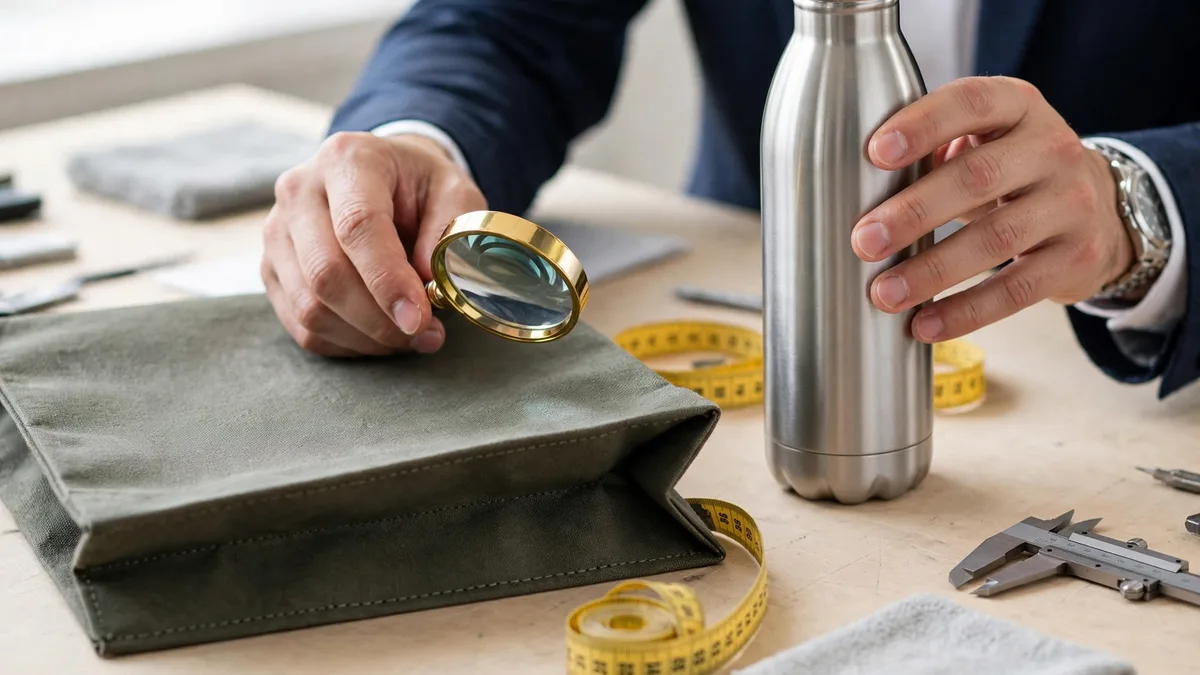
Start with the obvious, because it is the mistake that happens most often. Check the product against the quotation: the same model, the same size, the same colour, the same material. Open it, close it, hold it, use it the way a recipient would. A diary should open flat and the pages should turn cleanly. A steel bottle should feel solid, not thin or light. A backpack’s zips should run smoothly. A hamper’s items should be the items on the list, in the quantities promised. If the vendor substituted a different model — even a similar one — because the original was out of stock, that is a change that needs your agreement, not a detail to discover after production. Compare the sample against the minimum order quantity for corporate gifts in India you agreed, too: the sample should be the product at the quantity and specification you actually ordered.
2. The logo file — is the branding made from the right artwork?
Before you look at the branding itself, confirm which file the vendor used. Ask, in writing: was this branded from the vector file you sent, or from a redrawn or traced copy? A logo traced from a low-resolution image will look acceptable at a glance and wrong on close inspection — soft edges, uneven curves, missing detail. If the vendor redrew your logo, compare the sample’s logo against your master artwork side by side, letter by letter. This is the step most buyers skip, and it is the step that causes the most expensive rework. If you have not yet built a proper logo pack, read our guide to logo file formats for gift branding — the AI, EPS, PNG question should be settled before the sample is made, not after it fails.
3. Logo placement — is it in the right place, at the right size?
Check the position of the logo on the product: centred where it should be centred, aligned where it should be aligned, with the clear space around it that your brand needs. Measure it if you can — a logo that is 5 mm off-centre is hard to see on a screen and obvious in the hand. Check the size as well: a logo printed too small looks like an afterthought, and a logo printed too large crowds the product. On a kit, check the placement on every item, not just the most visible one. A welcome kit where the diary is branded perfectly and the bottle carries a logo half the size looks inconsistent, and inconsistency is what recipients notice. For how tiered kits should hang together, see our guide to gifts for channel partners in India.
4. Colour — does the branding match your brand colour?
Colour is the check that fails most often and is hardest to judge from a photograph, which is another reason to see the sample in person. Compare the branded colour against a printed brand reference — a business card, a letterhead, a Pantone swatch — not against your phone screen, because screens and print show colour differently. On printed items, check that the colour is even across the whole logo, with no fading at the edges. On embroidered items, check the thread colour against the reference in daylight. On engraved items, remember that engraving shows the material underneath, not ink, so agree what the finished colour will be. If your brand colour matters — and for a client gift it always does — ask the vendor to confirm the CMYK or Pantone reference they used, in writing, before you approve.
5. Print and branding quality — is the work clean?
Look closely at the branding itself. On printed items, the edges of letters and lines should be sharp, not fuzzy or bleeding. Small text — a tagline, a website address — should still be readable at the actual size on the product. On embroidered items, the stitching should be even and tight, with no loose threads, no puckering of the fabric, and no gaps where the design is thin. On engraved items, the lines should be clean and unbroken, with even depth. On debossed or foil-stamped items, the impression should be even across the whole design, with no areas that are too shallow or too deep. Run your finger over the branding: it should feel intentional, not rough or peeling. If anything looks like it will wear off after a week of use, it will.
6. Spelling and personalisation — is every word correct?
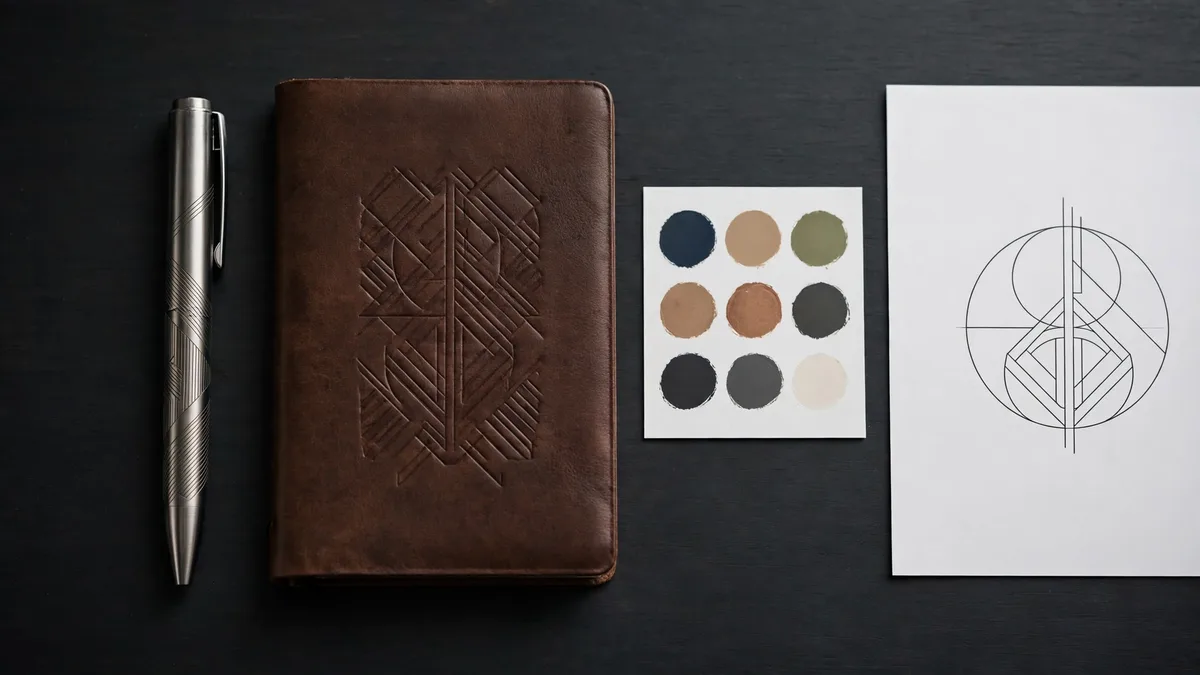
Read every word on the sample, including the ones you think you already know. Check the company name, the tagline, the website address, the event name, the date and any personalised names — character by character. Personalised gifts are where spelling mistakes do the most damage, because the wrong name on a gift is not a printing error, it is a personal insult to the recipient. If the order includes personalised items, check at least one sample for each personalisation type, and ask the vendor how they will verify the name list before production. A simple safeguard: have a second person read the sample independently. Fresh eyes catch what the person who wrote the text cannot see.
7. Materials and build quality — will it last?
A corporate gift is judged by the recipient the first time they use it, and a gift that breaks, leaks or falls apart does more damage than no gift at all. Test the sample the way a recipient would. Fill the bottle with water and leave it on its side for an hour. Open and close the bag’s zips twenty times. Write in the diary with a normal pen and check whether the ink bleeds through. Shake the hamper gently and listen for loose items. Bend the power bank cable, open the umbrella, try the pen. Check the stitching, the seams, the hinges and the clasps. If the sample feels flimsy, the production run will feel flimsy too — and 500 flimsy gifts are worse than 50 good ones. Build quality is also where a cheaper substitute shows up: if the vendor changed the material to save cost, the sample is where you will feel it.
8. Function — does the gift actually work?
A surprising number of corporate gifts fail at the most basic level: the power bank does not charge, the Bluetooth speaker does not pair, the insulated bottle does not keep water hot, the diary’s pages fall out, the umbrella does not open fully. Test every function of the sample. Charge the power bank and check the output. Pair the speaker and play something. Fill the bottle with hot water, close it, and check it an hour later. If the gift has a gadget, ask the vendor for the specification sheet and check that the sample matches it — capacity, output, battery life, certifications. A gift that does not work is not a gift; it is a complaint waiting to happen, and it will be associated with your company, not with the vendor.
9. Packaging — is it the packaging you agreed, assembled properly?
Packaging is the first thing the recipient sees, and it is often the part of the order that gets the least attention at the sample stage. Check the box, the bag or the sleeve against what was quoted: the right material, the right size, the right print, the right finish. Open it and close it. Check that the gift fits properly — not so tight that the recipient has to force it out, not so loose that it rattles around. Check the protective packing inside: is the bottle wrapped, are the items separated, will the contents survive a courier journey? Check the printed elements on the packaging itself — the logo, the message, the handling instructions — with the same care as the gift. And check the assembly: if the vendor is packing the kits, the sample should be packed exactly as the production kits will be packed, by the same team, in the same way.
10. Quantities, variants and the full kit — is everything there?
For a kit or a multi-item order, check the complete list against the sample. Count the items. Check every variant: if the order has three gift tiers, check a sample of each tier; if the hamper comes in two sizes, check both. If different recipient groups get different gifts — employees, clients, partners — check a sample for each group. This is the check that catches the missing item, the wrong flavour, the diary in the wrong colour, the item that was swapped for a cheaper one. It is also the check that catches a kit that is technically complete but badly balanced — a hamper that is mostly packaging, a kit where one item dominates and the rest look like filler. Compare the sample against the minimum order quantity for corporate gifts in India and the tier plan you agreed; the sample is the moment to confirm that what you are approving is what you are paying for.
11. Compliance and safety — is anything in the gift a problem?
Some gifts carry rules. Food items need expiry dates and ingredient labels, and the packaging should carry them clearly. Candles, electronics and power banks need safety certifications, and the vendor should be able to show them — ask for the certificate, do not take the claim on trust. For gifts going to clients in regulated sectors — banks, pharma, healthcare — check that nothing in the gift breaches the recipient’s own gifting policy or your company’s policy. If the gift includes a food item, check the expiry date on the sample and ask how the vendor manages expiry across a production run that may be packed over several days. And if the gift is being shipped, check that the packaging and labelling meet the courier’s requirements, so the gifts do not get held up in transit. This check takes five minutes on a sample and can save a compliance problem that would otherwise surface after the gifts have been delivered.
12. The golden sample agreement — is the approval recorded?
The final check is not on the gift, it is on the paperwork. Before you say “approved”, confirm in writing: this sample, as it stands, is the standard for the production run. Label it — order number, date, product, quantity, the names of the people who approved it — and agree with the vendor that this labelled piece will be kept as the golden sample until the order is delivered and accepted. Confirm in the same message any changes you asked for, and what the vendor will do about them: a corrected sample, a photograph of the correction, or a written confirmation that the change will be made in production. If a second sample is needed, say so, and say what must be different in it. An approval that lives only in a phone call is not an approval; it is a disagreement waiting to happen. Write it down, keep a copy, and keep a photograph of the approved sample with the label visible.
How to Run the Approval Process, Step by Step
A checklist is only useful if the process around it is clear. Here is a practical sequence that works for most bulk orders in India.
First, agree the sample terms in the quotation itself: how many samples, what type, who pays for them, and how long the vendor needs to make them. A pre-production sample usually takes a few days to a week, depending on the product and the branding method, and it is often charged separately or adjusted against the order. Get this in writing before you confirm the order, because a vendor who has not budgeted sample time will rush it — and a rushed sample is a sample that hides problems.
Second, when the sample arrives, do the checking in one sitting, with the right people in the room. The person who chose the gift should be there, and so should the person who owns the budget — often that is the same person, but for a client gift it may be marketing, and for an employee gift it may be HR. If the logo or brand colour is involved, the brand or marketing owner should see the sample too. A sample approved by one person and rejected by another after production has started is a common and avoidable mess.
Third, record the result the same day. Send the vendor a written message — email is best — that says one of three things: approved as it stands, approved with the changes listed, or not approved, with the changes listed. Be specific: “approved, except the logo is 5 mm too low and the thread colour should be navy, not royal blue” is useful; “looks good, just fix the logo” is not. Attach photographs of the sample with the problems marked, and keep a copy of the message.
Fourth, if a second sample is needed, agree what will be different and how you will check it. A second sample that repeats the same mistake means the vendor did not understand the correction, and that is a signal to have a phone call rather than another round of samples. Two rounds of samples is normal for a branded order. More than three is a sign that something is wrong with the artwork, the product or the vendor, and it is worth pausing to find out which.
Finally, keep the golden sample safe until the order is delivered and accepted. When the production run arrives, compare a few pieces against the golden sample before you distribute them. That comparison is your final quality check, and it is the check that the golden sample exists to make possible.

What to Do When the Sample Fails
A failed sample is not a failed order. It is the system working. The sample did its job by catching the problem early, and the right response is calm, specific and written down.
Start by describing the problem precisely: what is wrong, where it is wrong, and what it should be. “The logo is blurry” is a complaint; “the logo is blurry because the file used was a low-resolution PNG; please reprint from the vector AI file we sent on 3 November” is an instruction the vendor can act on. Attach a photograph with the problem circled or marked.
Then agree the fix and the new timeline. Some fixes are fast — a corrected file, a different thread colour. Some are slow — a new die for debossing, a redrawn logo, a different product. Ask the vendor how long the fix takes and what it costs, and whether it changes the delivery date. If the delivery date moves, say so to the people waiting for the gifts now, not later. For help with that message, our corporate gifting announcement email templates give HR teams five ready-to-use formats.
If the sample fails twice on the same point, treat that as information about the vendor, not just about the sample. A vendor who cannot fix a colour match or a logo placement in two attempts may not be able to do it in production either. At that point the honest options are to simplify the branding, change the product, or change the vendor. All three are cheaper than a production run of gifts you cannot send.
One thing never to do: approve a bad sample because the deadline is tight. A late gift can be explained. A bad gift cannot be unexplained — it sits on the recipient’s desk, with your logo on it, for months. If the timeline no longer works, it is better to send the gifts a week late, or to send a simpler gift on time, than to approve a sample you know is wrong.
Common Mistakes to Avoid
Approving from a photograph. Photographs hide colour errors, soft print, loose stitching and flimsy materials. They also hide scale — a gift that looks generous in a photograph can feel small in the hand. Always see the physical sample if you possibly can.
Checking only the best item in a kit. Vendors naturally show you the kit at its best. Check every item, including the smallest and cheapest one, because the recipient will see all of them.
Letting one person approve alone. The person who chose the gift is the least likely to spot its problems. A second pair of eyes — especially the brand owner for logo and colour — catches what familiarity hides.
Forgetting the packaging. The box, the sleeve and the protective packing are part of the gift. A beautiful gift in a crushed or ill-fitting box arrives looking careless.
Approving verbally. “Looks fine” on a phone call is not an approval. Without a written record, there is nothing to compare the production run against and nothing to rely on if the order goes wrong.
Skipping the function test. A gift that does not work is worse than no gift. Test every function — charge it, fill it, open it, pair it — before you approve.
Accepting a substitute product without agreeing to it. If the vendor changes the product, the material or the branding method, that is a new agreement, not a detail. Confirm it in writing, with the price effect stated, before you approve the sample.
Frequently Asked Questions
Should I approve a sample before bulk corporate gift production?
Yes — always. A pre-production sample is the only moment in the order when you can see, touch and test the real branded gift before hundreds or thousands are made. Approving it carelessly locks any mistake into the whole production run, where fixing it costs the order rather than a phone call.
What is a golden sample in corporate gifting?
The golden sample (or sealed sample) is the approved pre-production sample itself, kept aside and labelled with the order number, date and the names of the people who approved it. It becomes the reference for the whole order: when the production run is inspected, each piece is compared against the golden sample, not against a photograph or a memory.
How many samples should I check for a bulk gift order?
At least one pre-production sample of the complete gift, and two or three pieces for a large or high-value order so you can check consistency between pieces. For kits, check a sample of the complete kit — not just its best-looking item — and a sample of each tier or variant if the order has more than one.
What if the gift sample is wrong?
Describe the problem precisely and in writing, with a photograph marking the fault, and agree the fix and the new timeline with the vendor. A failed sample is the system working — it caught the problem while it was still cheap to fix. Never approve a bad sample because the deadline is tight; a late gift can be explained, a bad gift cannot.
Who should approve a corporate gift sample?
The person who chose the gift and the person who owns the budget, plus the brand or marketing owner when the logo or brand colour is involved. A second pair of eyes catches what familiarity hides, and the brand owner is the right person to judge colour and logo placement.
How long does sample approval take?
A pre-production sample usually takes a few days to a week to make, depending on the product and the branding method. Allow time for one round of corrections and a second sample if needed — two rounds of samples is normal for a branded order. Build this time into the order schedule from the start.
Can I approve a sample from a photograph?
Only as a last resort. Photographs hide colour errors, soft print, loose stitching and flimsy materials, and they hide scale. If you cannot see the sample in person, ask for clear photographs from several angles plus a short video, and record the approval in writing with the limitations noted.
The Short Version
A sample is the cheapest quality control in your order: it is the one moment when a mistake costs a phone call instead of a production run. Get a pre-production sample, keep the approved piece as a labelled golden sample, and run the twelve checks — product, artwork file, placement, colour, print quality, spelling, materials, function, packaging, quantities, compliance and the written approval itself. Check it in person, in good light, with a second person, and record the approval in writing the same day. If the sample fails, fix it now; never approve a bad sample because the deadline is tight. Once the gifts are approved and on their way, let recipients know they are coming — our corporate gifting announcement email templates give HR teams five ready-to-use formats for exactly that, and for the wider planning picture, see our guide to how early to order corporate gifts.
Natural CTA
If your next bulk gift order is about to enter production, do not let the sample stage pass in a hurry. Ask your vendor for a pre-production sample, run the twelve checks in this guide with a second person beside you, and record the approval in writing with the sample labelled and kept as your golden standard. The five minutes it takes is the cheapest quality control in the whole order — and it is the difference between gifts your recipients are proud to receive and gifts your company has to explain. If you are planning a branded order and want help choosing the right products, branding method and approval process for your timeline, Arrow Gifter’s team can walk through the options with you — share your occasion, your quantities and your logo file, and get a quotation that already includes the sample stage.
Leave a comment