Women’s Day Gifting Mistakes: What Companies Should Never Gift Women at Work
Every March, the same scene repeats itself in offices across India. A week before 8 March, someone in HR realises Women’s Day is coming, a quick order goes in for roses and chocolates, and on the morning itself every woman in the office receives the same pink-wrapped box at her desk. The intention is good. The result, very often, is not. The gift is photographed once, mentioned politely, and quietly forgotten — or worse, remembered as the year the company gave the women on its team a kitchen apron.
Women’s Day gifting is one of the easiest corporate gifting programmes to get wrong, and one of the hardest to recover from when it goes wrong. A Christmas gift that misses the mark is forgotten by January. A Women’s Day gift that feels patronising is remembered, because it does not just say “we got the gift wrong” — it says “this is how the company sees its women”. That is why the planning matters more than the product, and why the mistakes below are worth reading before a single order is placed.
This guide is for the HR, engagement or admin team planning Women’s Day gifting in India: the ten mistakes companies make most often, why each one lands badly, what to give instead, and how to run a programme that the women in your company actually value. It is written from the same practical standpoint as the rest of this series — budgets, ordering, packaging and delivery matter — but the first question here is different. Before asking what the gift costs, ask what it says.
Why Women’s Day Gifting Goes Wrong So Often
Most Women’s Day gifting mistakes share one root cause: the gift is chosen for the occasion, not for the recipient. Christmas gifting has a clear brief — a festive gift for everyone. Women’s Day gifting has a harder brief — a gift that recognises women as professionals, colleagues and leaders, on a day that exists to mark their contribution and the work still to be done. A generic gift cannot carry that brief, and a stereotyped gift actively works against it.
The second cause is time. Women’s Day falls on 8 March, which means the ordering window is February — a month when most companies are closing the financial year, running appraisals and planning the next quarter. Gifting is left to the last week, and last-week gifting is always the same: whatever is in stock, in pink, in bulk. The rush is visible in the result, and the recipient can tell the difference between a gift chosen in February and a gift ordered on 6 March.
The third cause is that nobody asks. The women in the company are rarely consulted about what they would value, even informally. A five-minute conversation with a few women across roles — junior, senior, support staff, remote — would prevent most of the mistakes in this guide. The companies that get Women’s Day right are almost always the ones that asked first, and the ones that get it wrong are almost always the ones that assumed.
There is also a real business cost to getting it wrong. A gift that feels patronising does not just waste its own budget; it undermines the recognition programme it was supposed to support. Recognition, as the general guidance from SHRM puts it, should be specific and timely — and a gift that treats half the workforce as a single stereotype is neither. It also travels: employees talk about bad gifts, post about them, and remember them at appraisal time. A ₹500 gift that lands badly costs far more than ₹500 in goodwill. The guide to year-end gifts for top-performing employees makes the same point for a different occasion — recognition that feels generic does not recognise anyone — and it applies with more force on Women’s Day than anywhere else.
The 10 Women’s Day Gifting Mistakes to Avoid

Mistake 1: Kitchen and household items
The single most common Women’s Day gifting mistake in India, and the one that draws the strongest reaction, is the kitchen gift: the apron, the casserole set, the pressure cooker, the dinner set, the “useful for the home” hamper. It is usually ordered with good intentions — “something useful” — and received as a message nobody intended: that a woman’s place, even at work, is in the kitchen.
Do not gift kitchen or household items to women at work. Not a good-quality one, not a premium one, not one with a nice brand on it. The quality of the item does not fix the message, because the message is the category. A woman who leads a sales team, runs a plant, or manages a portfolio does not want her employer to mark her professional contribution with a cooking utensil. If the gift would be strange to give to a male colleague of the same seniority, it is strange to give to a woman of that seniority. That is the simplest test in this whole guide, and it catches most of the mistakes in it.
The same rule covers cleaning products, laundry items and anything whose use is housework. A gift should recognise the person at work, not assign them a role at home.
Mistake 2: Flowers and chocolates — alone
Flowers and chocolates are not bad gifts. They are incomplete gifts, and on Women’s Day they are the most overused incomplete gift in corporate India. A rose and a box of chocolates, handed to every woman in the office, says the company spent five minutes and a small budget on the occasion. It is the gift equivalent of a forwarded greeting card.
The problem is not the flowers themselves. It is that they are perishable, identical, and gone within days — and they carry no recognition of the individual at all. A woman who has spent the year leading a difficult project receives the same rose as a woman who joined last month. Nothing in the gift acknowledges either of them.
If flowers are part of the programme, make them part of something larger: a gift with a useful item, a handwritten message, a moment of genuine recognition. Flowers as a garnish are fine. Flowers as the whole gift are not. And if the budget only stretches to flowers, spend the planning time instead — a sincere, specific message from a manager, delivered in person, is worth more than a rose that wilts by Monday.
Mistake 3: Beauty, weight and appearance gifts
Gifts that comment on a woman’s appearance are a minefield, and most companies walk straight into it: beauty hampers, cosmetics, slimming teas, fairness products, shapewear, diet plans, gym memberships framed as weight loss. Every one of these carries a message the company did not intend — that a woman’s appearance is her employer’s business — and every one of them can cause genuine offence.
The rule is simple: never gift anything that implies a woman should change how she looks. That covers cosmetics chosen by someone else (shade, skin type and personal taste make this a poor bulk gift in any case), anything marketed around weight, fairness or anti-ageing, and any “wellness” gift that is really a diet product in disguise. Even a well-meant spa voucher can land awkwardly if it is framed as a beauty treatment rather than rest; the framing matters as much as the item.
Wellness gifts themselves are not the problem — a good wellness gift is one of the best Women’s Day options, and the section below sets out how to choose one. The mistake is choosing a wellness gift that is really an appearance gift. If the gift’s marketing copy mentions weight, fairness, slimming or looking younger, it does not belong in a Women’s Day programme.
Mistake 4: The same gift for every woman, regardless of role
A company with 500 women employees does not have one kind of woman employee. It has senior leaders, junior executives, support staff, security and housekeeping teams, women on night shifts, women working from home, and women in the field. Giving all of them the identical gift is not equality; it is indifference. It tells the senior leader and the housekeeping supervisor that the company sees them as the same person.
Tier the gifting. It does not need a complicated structure — three tiers are usually enough: a thoughtful standard gift for all women employees, a more premium option for senior women leaders and women clients, and a practical, respectful gift for support staff and field teams. The inclusive holiday gifting guide for support staff, security and housekeeping teams sets out exactly how to include the people most often missed from a gifting list, and its discipline — build the list with HR, admin and facilities, cover all shifts and all sites — applies directly to Women’s Day.
Tiering is also a budget tool. A flat gift for everyone at the senior tier’s price is unaffordable; a flat gift at the standard tier’s price underwhelms the people whose contribution is greatest. Three tiers let the company spend properly on each group without overspending on the programme as a whole.
Mistake 5: Pink everything
Pink wrapping, pink ribbons, pink cards, pink mugs, a pink gift box with a pink bow. The colour is not offensive in itself, but as a programme design it is lazy, and it signals that the gift was chosen for the gender, not the person. Many women like pink. Many do not. A programme that wraps everything in pink has decided, on behalf of hundreds of women, that they all do.
Use the company’s own brand colours, or a neutral, elegant palette — deep purple is the recognised colour of International Women’s Day and reads as considered rather than stereotyped. Let the packaging be premium and consistent, the way it should be for any corporate gift, and let the contents do the talking. The guide to Christmas gifts for office staff under ₹1,000 makes the packaging point well: the recipient judges the gift by the box before the contents, and a box that looks considered sets the tone for everything inside it.
Mistake 6: Gifts that are really advertising
A gift that is mostly logo is not a gift; it is a marketing item. A mug with a huge company logo, a tote bag that is essentially a billboard, a diary with the logo on every page — these tell the recipient that the occasion was an opportunity for the company, not for her. On Women’s Day, that message is particularly sour: the day is about recognising women, and the gift turns it into a branding exercise.
Brand one thing well, or brand nothing. A small, clean logo on the gift box sleeve or on a quality item is fine. A logo on every surface is not. And never let the branding budget eat the gift budget: if the choice is between a better gift and a louder logo, choose the better gift. The same rule applies to client gifting on Women’s Day — a premium gift for a woman client or business leader should not look like advertising, and the guide to Christmas gifts for clients in India makes that case in detail.
Mistake 7: Forgetting the women who are not in the office
The night shift, the branch office, the women working from home, the field team, the woman on leave, the new joiner who started in March. Every company has women who are not at their desk on 8 March, and every year some of them are missed. Being missed on Women’s Day is worse than receiving a mediocre gift: it says the company did not even count you.
Build the list completely, and build it early. Work with HR, admin and facilities to cover all shifts, all sites, all work modes and anyone on leave. For remote and hybrid women employees, courier the gift to the home address — the guide to Christmas gifts for work-from-home employees sets out the address-collection and delivery discipline that applies here too: collect and verify addresses early, in writing, and do not leave it to the week of dispatch. Hold back spares — 2 to 3 per cent of the headcount — for late additions and anyone who was missed. And follow up after the day itself: confirm that every woman on the list received her gift, and fix any gap the same week.
Mistake 8: A generic message, or no message at all
A gift without a message is a parcel. A gift with a generic message — “Happy Women’s Day! You are special!” — is a parcel with a label on it. The message card is the cheapest part of the programme and the part that carries the most meaning, and it is the part most companies treat as an afterthought.
Write a message that is specific and sincere. It does not need to be long: two or three sentences that say what the company values about its women colleagues, in plain language, without clichés. Avoid the stock phrases — “the backbone of the organisation”, “you make the workplace beautiful”, “behind every successful man” — all of which say more about the writer’s assumptions than about the women being thanked. A good test: would the message work if it were read aloud to the team? If it sounds like a greeting card from a decade ago, rewrite it.
Where the logistics allow it, add the recipient’s name to the card. A name on the card is worth more than a logo on the box, and it is the single cheapest way to make a bulk gift feel personal.
Mistake 9: Treating Women’s Day as a one-day performance
A gift on 8 March, and nothing else for the other 364 days, is a performance — and the women in the company know it. The gift lands badly when the rest of the year tells a different story: no women in leadership meetings, no flexible work options, no attention to safety on late shifts, no pay parity conversation. A Women’s Day gift cannot compensate for a workplace that does not support women, and when it tries to, it reads as insincere.
This does not mean a company should skip the gift until everything else is perfect. It means the gift should sit inside a genuine programme, not in place of one. If the company is running a Women’s Day event, a mentorship session, a panel, or a policy announcement, let the gift be part of that — and let the day’s programme be real. A thoughtful gift plus a genuine conversation is worth far more than an expensive gift plus silence.
For the event itself, the same gifting discipline applies to attendees, speakers and panellists — and a later guide in this series will cover Women’s Day event gifting in detail. The principle is the same: the gift should recognise the person, not the stereotype.
Mistake 10: Ordering late and letting the rush show
Women’s Day is 8 March, every year, on the same date. There is no excuse for ordering on 5 March, and yet many companies do — then pay rush charges, accept a narrower choice, or receive gifts after the day itself. A late gift is a visible mistake: the packaging is rushed, the message card is generic, the delivery is chaotic, and the recipient can tell the whole thing was an afterthought.
Work backwards from 8 March. Finalise the gift and the vendor by early February, approve a packed sample within a week, place the bulk order immediately after, and have the gifts in hand at least a week before the day. The delivery-deadlines discipline from the Christmas programme applies here exactly: fix the distribution date first, then work backwards through packing, production and ordering. A Women’s Day programme planned in February looks planned. A programme ordered in March looks panicked, whatever it costs.
What to Gift Instead: Respectful Ideas That Work

Avoiding mistakes is only half the job. The other half is choosing a gift that women employees actually value — and the good news is that the best options are straightforward, once the stereotypes are out of the way.
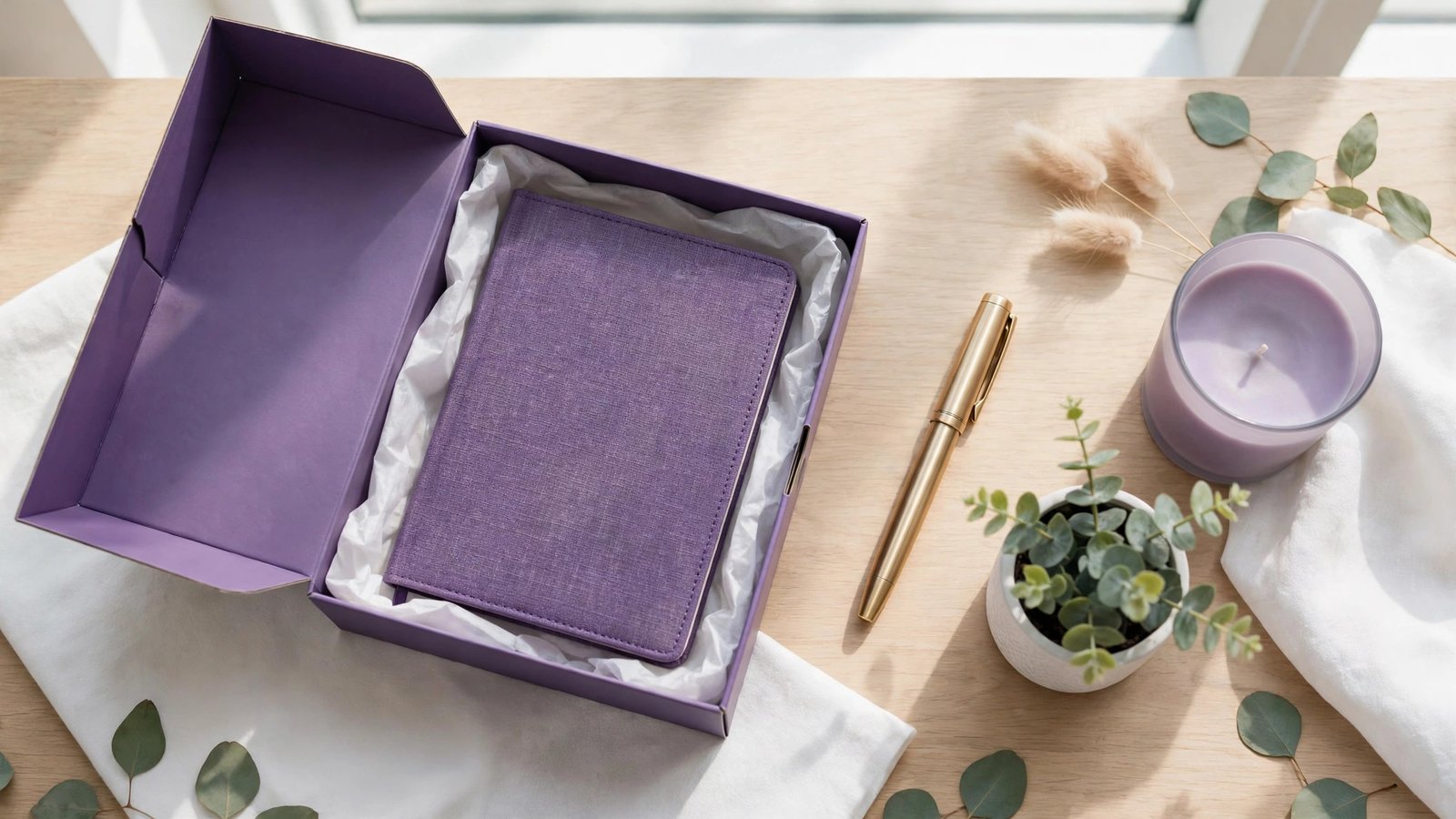
Useful desk and work gifts. A quality diary or planner, a premium pen set, a good notebook, a laptop accessory, a desk organiser. These work because they recognise the person as a professional, they are used daily, and they carry a logo cleanly without looking like advertising. The New Year desk calendars and diaries guide is a natural companion here — a diary or planner ordered with Women’s Day in mind is useful for the whole year, not just the day. At a ₹500 to ₹1,000 budget, one good desk item plus a small companion, like a pen with the diary, feels considered rather than assembled.
Wellness gifts — the right kind. A scented candle, a quality hand cream set, a small plant, a herbal tea selection, a comfortable shawl, a sleep or relaxation kit. These work because they acknowledge the person rather than the job, and because rest is something most working women genuinely value. The test for any wellness gift is the same as the appearance test above: if the gift’s marketing mentions weight, fairness or looking younger, it is not a wellness gift. A candle, a plant and a good tea are wellness. A slimming tea is not.
Experience gifts. A workshop voucher, a book voucher, a learning subscription, a hobby class, a spa voucher framed as rest rather than beauty. Experience gifts work particularly well for senior women leaders and women clients, where a physical gift risks feeling generic. They also scale well: a voucher costs the same whatever the recipient’s taste, and it lets her choose for herself. For women clients and business leaders, where the relationship matters more than the item, an experience gift is often the most respectful choice — a point the next guide in this series, on Women’s Day gifts for women clients, will develop in full.
Food hampers — done properly. A curated hamper of premium tea or coffee, dry fruits, a good snack and a small sweet works because it is shareable with the family, does not depend on knowing one person’s taste, and is useful rather than decorative. At Women’s Day, keep the hamper elegant and neutral: no pink packaging, no “for her” labelling, no kitchen items. The comparison in the Christmas hampers vs gift boxes guide is directly useful — for a large headcount, a rigid gift box is usually easier to pack, stack, carry and distribute than a loose hamper, and it survives handling far better.
A gift with a choice. Where the ordering system supports it, offering a choice between two or three gifts at the same value removes the risk of giving someone something she will not use. It adds complexity — three items to order, pack and track instead of one — and for headcounts above a few hundred, the complexity usually costs more than the choice is worth. For most programmes, one well-chosen gift, well packed, beats three options badly managed. But for smaller teams, or for senior leaders and clients, a choice is a genuinely respectful gesture.
The message, again. Whatever the gift, the message card matters most. A specific, sincere message — ideally with the recipient’s name — is what turns a good gift into a memorable one. Budget the time for it the way you budget the money for the gift.
How to Plan a Women’s Day Programme That Gets It Right

A good Women’s Day programme is a project, not a purchase. Run it in order, and do not skip a step because the main order is already placed.
Start in January. Fix the date — 8 March — and work backwards. January is for the decision: budget per head, headcount, tiers, and the gift shortlist. February is for sampling, approval and ordering. The first week of March is for packing, distribution and the event itself. A programme that starts in January looks considered; a programme that starts in March looks rushed, whatever it costs.
Ask the women in the company. Before choosing, ask a small, diverse group of women across roles and levels what they would value — informally, in conversation, not as a formal survey. Ask support staff and remote employees too, not just the women in the head office. Five conversations will prevent more mistakes than any guide, including this one.
Set the budget on landed cost. A ₹1,000 per-head budget is not ₹1,000 of product. Work backwards from the total: product, packaging, branding, packing, delivery and a small contingency for damage and late additions. The Christmas gifts for office staff under ₹1,000 guide sets out the arithmetic — product roughly ₹650 to ₹800, packaging ₹100 to ₹180, branding ₹30 to ₹80 — and the same split works for Women’s Day. A gift that costs ₹1,000 on the catalogue and ₹1,250 delivered is not a ₹1,000 gift; it is a budget overrun that finance will notice and next year’s programme will pay for.
Approve a packed sample. Order one complete gift — the actual product, in the actual packaging, with the actual branding and the actual message card — and check it against a simple list: does it feel like its price, is the branding clean, does the box close properly, does the message read well, would you be pleased to receive it? Approve the sample in writing, with a photograph, and keep it as the reference the bulk delivery is checked against.
Check the bulk delivery. When the order arrives, check a random sample — at least 5 per cent, more if the headcount is small — against the approved sample. Finding a problem at this stage is fixable; finding it during distribution is not. Hold back 2 to 3 per cent of the finished gifts as spares for damage, misprints and late additions.
Distribute with care. Hand the gifts over in person, by name, with a few words of thanks — not left on a desk, not handed over in a rush by someone who regards it as an administrative task. For remote employees, courier to the home address with a sturdy outer carton. Confirm after the day that every woman on the list received her gift, and fix any gap the same week.
Keep the record. Gift, cost, vendor, count, date, and what worked. Review it before next year’s programme. The companies that improve year on year are the ones that kept notes, not the ones that started from scratch each February.
FAQs
1. What are the biggest Women’s Day gifting mistakes companies make?
The most common are kitchen and household items, flowers and chocolates as the whole gift, beauty or weight-related products, the same gift for every woman regardless of role, pink-everything packaging, gifts that are mostly logo, forgetting women who are not in the office, a generic message or no message, treating the day as a one-off performance, and ordering so late that the rush shows.
2. What should companies never gift women at work on Women’s Day?
Never gift kitchen items, cleaning products, cosmetics chosen for someone else, slimming or fairness products, or anything that implies a woman should change how she looks. If the gift would be strange to give to a male colleague of the same seniority, it is strange to give to a woman of that seniority.
3. Are flowers and chocolates okay as Women’s Day gifts for employees?
They are fine as part of a gift, but not as the whole gift. A rose and a box of chocolates, identical for every woman in the office, says the company spent five minutes on the occasion. Pair them with a useful item and a specific, sincere message, and they work well.
4. What are the best Women’s Day gifts for women employees in India?
The most reliable options are quality desk and work gifts such as a diary, planner or premium pen set; genuine wellness gifts such as a candle, plant, herbal tea or shawl; experience gifts such as a workshop or book voucher; and a curated food hamper in elegant, neutral packaging. Tier the gifting — a standard gift for all, a more premium option for senior leaders and women clients.
5. How much should a company budget for Women’s Day gifts?
A realistic working range is ₹500 to ₹1,000 per head, budgeted on landed cost — product, packaging, branding, packing, delivery and a small contingency — not on the catalogue price. For a ₹1,000 budget, the product itself is usually ₹650 to ₹800, with the rest going to packaging, branding and delivery.
6. When should HR start planning Women’s Day gifting?
Start in January. Fix the budget, headcount and tiers in January, approve a packed sample and place the bulk order in February, and have the gifts in hand at least a week before 8 March. Ordering in the first week of March usually means rush charges, a narrower choice, or late delivery.
7. How do I make sure no woman employee is missed on Women’s Day?
Build the list with HR, admin and facilities, covering all shifts, all sites, all work modes, anyone on leave and new joiners. Courier gifts to the home addresses of remote and hybrid employees, hold back 2 to 3 per cent as spares, and confirm after the day that every woman on the list received her gift.
8. Should Women’s Day gifts be the same for employees and clients?
No. Employees should receive a gift that recognises them as professionals, tiered by role. Women clients and business leaders deserve a more premium, more personal option — often an experience gift or a high-quality hamper — because the relationship matters more than the item, and a generic gift to a senior client lands worse than no gift at all.
Conclusion
Women’s Day gifting is a small programme with an outsized message. Get it right, and it tells the women in your company that they are seen as professionals — people whose contribution is recognised, whose time is respected and whose judgement is trusted. Get it wrong, and it tells them the opposite, in a way a Christmas gift never could. The rules are not complicated: no kitchen gifts, no appearance gifts, no pink everything, no same gift for everyone, no last-minute rush. Ask the women in your company, tier the gifting by role, choose something useful and respectful, write a message that means something, and deliver it to every woman on the list — in the office, at home, on every shift and at every site. Do that, and 8 March becomes what it should be: a day the women in your company actually remember fondly.
If you are planning Women’s Day gifting this year, start with the test this guide keeps coming back to: would this gift feel right if it were given to a colleague of the same seniority, regardless of gender? If the answer is yes, you are on solid ground. Plan from January, ask the women in your company what they would value, tier the gifting by role, and spend the time on the message as well as the money on the gift. Arrow Gifter works with HR, engagement, admin and procurement teams in India on Women’s Day gifting — from shortlisting respectful, useful gifts and premium packaging to multi-site distribution that reaches every woman on the list, in the office or at home. Talk to the team about your headcount, your budget and your date, and plan the programme around the women it is for.
2 Comments